In the rapidly evolving world of networking, data speed and reliability are no longer just luxuries—they are operational necessities. Whether you are managing a high-density data center, a modern smart office, or a high-performance home gaming setup, the choice of cabling infrastructure will define your network's ceiling for years to come. Today, the most frequent debate among installers and IT professionals centers on two standards: Category 6 (Cat6) and Category 6 Augmented (Cat6a).
While these two categories share a similar name, their technical capabilities and physical characteristics are distinct. Choosing the right one requires a deep dive into speed, distance, and the future-proofing of your environment.
Introduced as the successor to Cat5e, Category 6 (Cat6) was designed to support Gigabit Ethernet (1 Gbps) over the full 100-meter distance. It operates at a frequency of 250 MHz, which is two and a half times that of Cat5e.
The most interesting feature of Cat6 is its split personality regarding speed. While it is rated for 1 Gbps at 100 meters, it is also capable of supporting 10 Gbps speeds, but only over shorter distances, typically capped at 37 to 55 meters depending on the level of crosstalk in the environment. As a professional LAN cable supplier, Xingfa’s Cat6 cable is optimized with high-quality copper and an internal spline to minimize interference, making it an ideal choice for residential and small-to-medium business (SMB) applications that need high speed without the higher cost of augmented cabling.
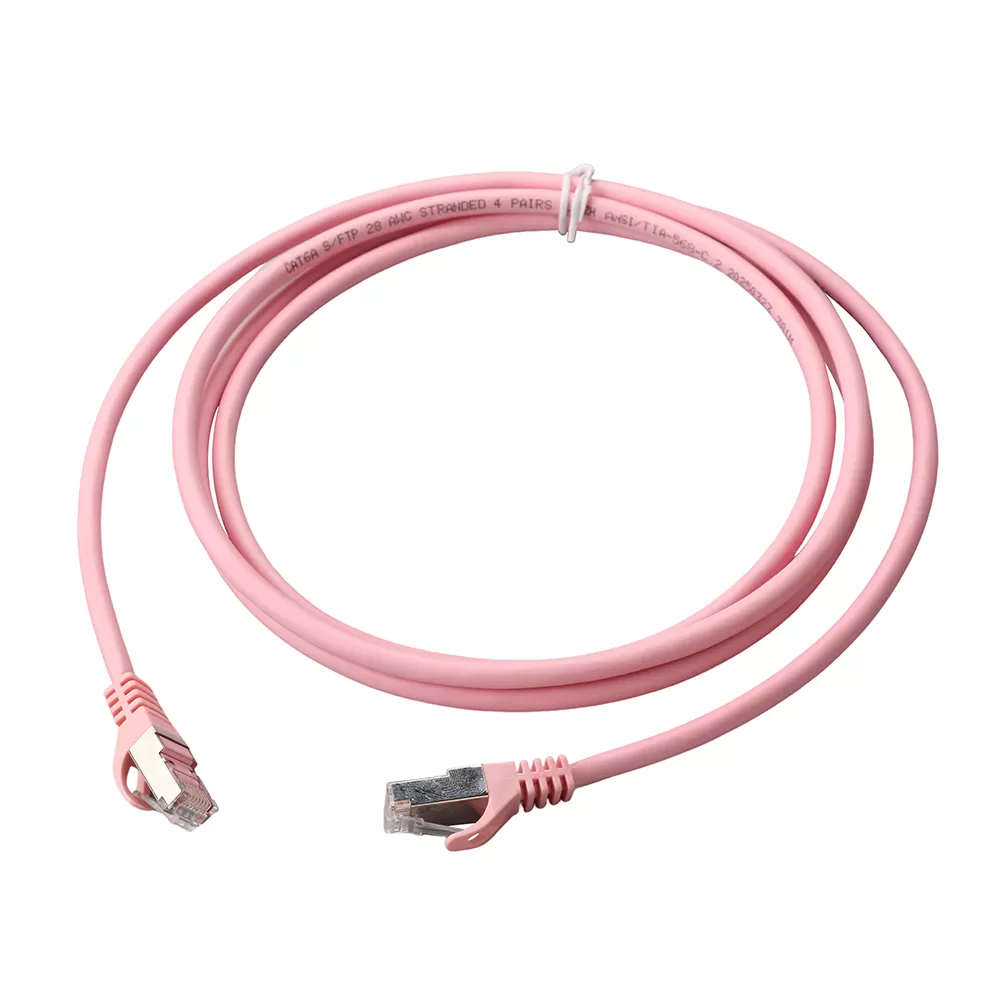
The "a" in Cat6a stands for "Augmented." Ratified in 2008, this standard was developed specifically to address the distance limitations of Cat6 when running 10 Gigabit Ethernet (10GBASE-T).
Cat6a doubles the frequency of Cat6, operating at a staggering 500 MHz. The primary advantage of Cat6a is its ability to maintain 10 Gbps speeds over the entire 100-meter run. Furthermore, Cat6a is built to significantly reduce Alien Crosstalk (AXT), which is the interference caused by adjacent cables bundled together. Xingfa’s Cat6a cable often utilizes superior shielding and thicker insulation to ensure that data integrity is maintained even in the most high-density, high-interference environments.
| Feature | Cat6 Cable | Cat6a |
| Max Data Rate | 1 Gbps (100m)/10 Gbps (up to 55m) | 10 Gbps (100m) |
| Frequency/Bandwidth | 250 MHz | 500 MHz |
| Max Distance (10Gbps) | ~37 to 55 Meters | 100 Meters |
| Alien Crosstalk (AXT) | Susceptible at high speeds | Highly Resistant |
| Typical Gauge | 24 AWG | 23 AWG |
| Cable Diameter | Thinner/More Flexible | Thicker/Less Flexible |
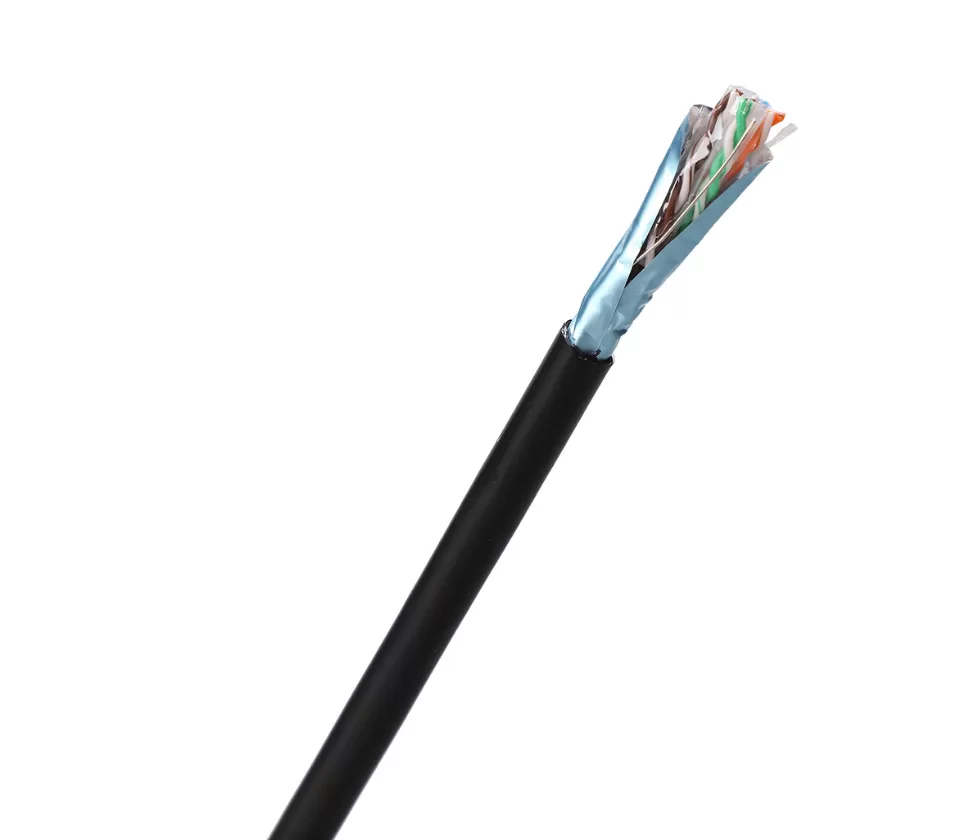
One of the most immediate differences an installer will notice is the physical size of the cable. Cat6a is noticeably thicker and heavier than Cat6. This is due to the larger 23 AWG copper conductors and the additional insulation or shielding required to reach the 500 MHz frequency.
The increased thickness of Cat6a makes it less flexible and harder to terminate. It requires a larger bend radius, which means you need more space in conduits, cable trays, and behind wall plates. For existing buildings with narrow conduits, Cat6 may be the only feasible option. However, for new constructions where performance is the priority, the robust build of Xingfa Cat6a provides the structural integrity needed for long-term reliability.
When deciding between these two, cost is a major factor. Cat6 cable is more affordable in terms of both the cable itself and the labor required for installation. For many standard office tasks, emails, HD video calls, and light cloud computing, Cat6 is more than sufficient.
However, the cost of a cable should be measured over its 15-to-20-year lifespan. As Wi-Fi 6E and Wi-Fi 7 access points become standard, they will require backhaul speeds exceeding 1 Gbps. Similarly, as 4K and 8K video editing, large-scale medical imaging, and AI data processing become more common, a Cat6 network might become a bottleneck. By investing in Xingfa’s Cat6a LAN cable today, businesses can avoid the massive labor costs of a complete network re-wire years down the line.
Another critical factor is Power over Ethernet (PoE). As we move toward smart buildings with PoE-powered lighting, security cameras, and displays, heat dissipation becomes an issue. Because Cat6a has a larger copper gauge, it handles the heat generated by high-wattage PoE (like PoE++ or 802.3bt) much better than the thinner Cat6. This reduces the risk of signal degradation due to heat and ensures that your hardware receives stable power and data simultaneously.
Choose Cat6 if: You are working with a tight budget, your building has limited conduit space, or your network requirements will likely stay at 1 Gbps for the foreseeable future. It remains a reliable, high-performance standard for most residential and basic commercial needs.
Choose Cat6a if: You are wiring a new facility, building a data center, or deploying high-end PoE devices. If you want to guarantee 10 Gbps speeds across your entire floor plan without worrying about crosstalk or signal loss, Cat6a is the industry standard for future-proofing.
The debate between Cat6 and Cat6a ultimately comes down to the balance between today's budget and tomorrow's needs. Cat6 is a versatile, efficient workhorse, while Cat6a is the high-bandwidth powerhouse designed for the next decade of digital innovation.
Regardless of your choice, the quality of the manufacturing is paramount. By sourcing your network infrastructure from Xingfa, you are guaranteed cables that meet and exceed TIA/EIA standards. Whether you opt for the cost-effective performance of Cat6 or the uncompromising speed of Cat6a, you can rest assured that your connection will be stable, secure, and ready for whatever the digital future holds.