In today’s world of high-speed communication, many different types of cables are used to transmit data and signals. One of the most enduring and widely used is the coaxial cable. Despite the rise of fiber optics and advanced Ethernet technologies, coaxial cables remain essential in television broadcasting, internet connections, and surveillance systems.
So, what does a coaxial cable do? In simple terms, it transmits high-frequency electrical signals while protecting them from interference and signal loss. This makes it a critical component in television, internet, and communication systems.
A coaxial cable (often called “coax”) is a type of electrical cable designed to transmit high-frequency signals with minimal interference. It consists of a central conductor surrounded by layers of insulation and shielding, all aligned along the same axis, hence the name “coaxial.” Originally developed in the early 20th century, coaxial cables have been widely used for radio frequency (RF) signal transmission, including television, broadband internet, and telecommunications.
At its core, a coaxial cable is designed to carry electrical signals efficiently and protect them from external interference. Its main functions include:
Coaxial cables transmit radio frequency signals, which are used for cable television (TV signals), broadband internet connections, and satellite communications. Unlike standard electrical wires, coaxial cables are optimized for high-frequency data transmission, making them ideal for multimedia and communication systems.
One of the most important roles of a coaxial cable is to protect signals from electromagnetic interference (EMI). The cable’s outer shielding layer, usually made of braided metal or foil, acts as a barrier that prevents external noise from affecting the signal. This ensures stable and high-quality transmission, even in environments with many electronic devices.
Coaxial cables are designed to minimize signal loss (attenuation) over long distances. While all cables experience some loss, coaxial cables are particularly effective at maintaining signal strength, which is why they are commonly used in long-distance communication systems and building infrastructure.
To understand how coaxial cables perform their function, it’s helpful to look at their structure.
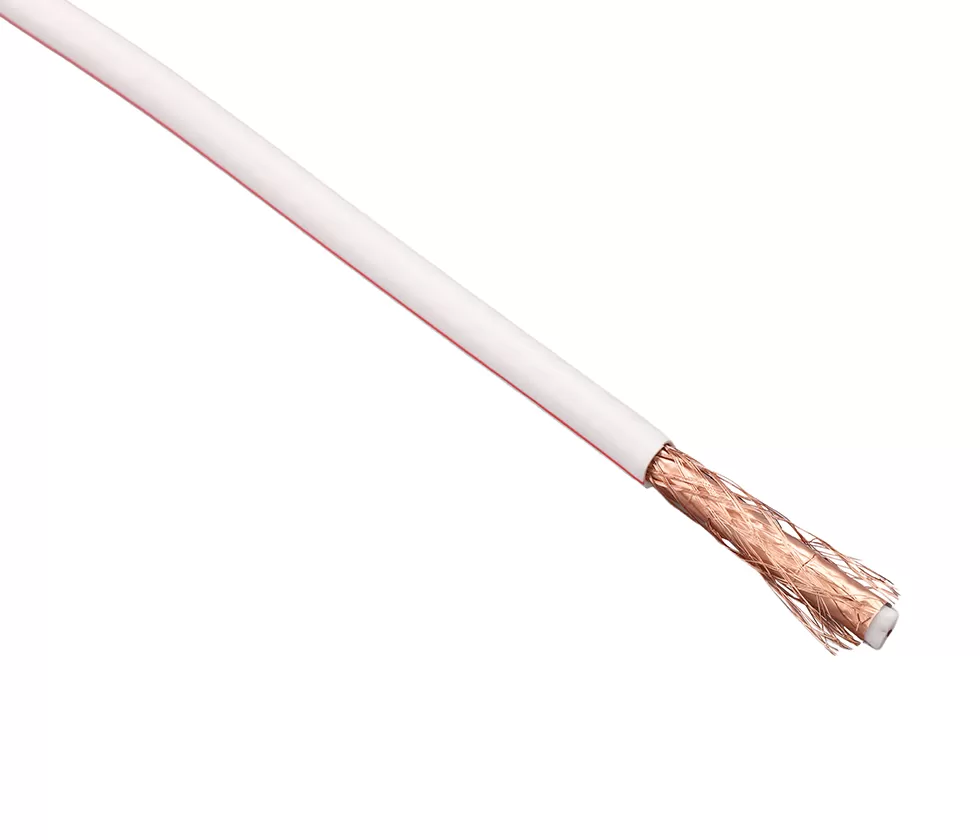
A typical coaxial cable has four main components:
Inner Conductor: Usually made of copper or copper-clad steel, this core carries the electrical signal.
Dielectric Insulator: A non-conductive material that surrounds the inner conductor and maintains spacing.
Shielding Layer: Made of metal foil or braided wire, this layer protects against interference.
Outer Jacket: A protective outer layer that shields the cable from environmental damage.
This layered design is what allows coaxial cables to deliver high performance with low interference.
Coaxial cables are used in a wide range of applications, including:
Cable Television: Coaxial cables are the backbone of cable TV systems, delivering video and audio signals from providers to homes.
Broadband Internet: Many internet service providers use coaxial cables to deliver high-speed broadband connections, especially in hybrid fiber-coaxial (HFC) networks.
CCTV and Surveillance: Coaxial cables are widely used in security camera systems, where stable video transmission is critical.
Radio and Telecommunications: They are also used in radio transmitters, antennas, and communication systems for reliable signal transfer.
Excellent Signal Protection: The shielding design provides strong resistance to EMI and signal leakage.
High Bandwidth Capability: Coaxial cables can support high-frequency signals, making them suitable for video and data transmission.
Durability: They are robust and can withstand harsh environmental conditions, especially when designed for outdoor use.
Cost-Effective: Compared to fiber optics, coaxial cables are often more affordable and easier to install.
The performance of a coaxial cable depends heavily on its materials, construction, and manufacturing quality. Poor-quality cables may result in signal loss, interference, or reduced lifespan. Manufacturers like Xingfa provide a wide range of coaxial cable solutions designed for modern communication systems. Our products are engineered to support applications such as television broadcasting, broadband networks, and security systems.
These cables typically feature:
High-purity conductors for better signal transmission
Advanced shielding for interference protection
Durable outer jackets for long-term use
By choosing reliable products, users can ensure stable performance and reduced maintenance costs.
While coaxial cables remain popular, they are often compared with other technologies:
Twisted pair (Ethernet cables): Common in local area networks, but more susceptible to interference
Fiber optic cables: Offer higher speeds and longer distances but at a higher cost
Coaxial cables sit in the middle, offering a balance of performance, reliability, and affordability, making them ideal for many everyday applications.
Thanks to its unique structure and proven reliability, coaxial cable continues to play a vital role in modern infrastructure. With high-quality solutions from manufacturers, businesses and consumers can rely on coaxial cables for efficient, durable, and high-performance signal transmission. As technology evolves, coaxial cables remain a trusted and practical choice for delivering stable connectivity across a wide range of applications.