When working with electrical or communication cables, you will often encounter the term AWG, short for American Wire Gauge. Understanding AWG is essential for selecting the right wire size, ensuring electrical safety, and achieving optimal performance in applications ranging from residential wiring to industrial systems.
American Wire Gauge (AWG) is a standardized system used in North America to define the diameter and thickness of electrical wires. It was introduced in 1857 to unify various wire measurement systems and remains widely used today. Unlike metric systems that use square millimeters (mm²), AWG assigns a numerical value to each wire size. These numbers correspond to the physical diameter of the conductor and, more importantly, its current-carrying capacity (ampacity).
A key feature of AWG is its inverse numbering system:
Higher AWG number → thinner wire
Lower AWG number → thicker wire
For example: 24 AWG is much thinner than 12 AWG, and 4/0 AWG (0000) is one of the thickest standard sizes.
AWG is based on a logarithmic scale, meaning each step in gauge size represents a consistent change in diameter and cross-sectional area. As the gauge number increases, the diameter decreases geometrically. Each size change significantly affects resistance and current capacity.
For instance, a thicker wire (lower AWG) has lower electrical resistance and can carry more current safely. Conversely, a thinner wire (higher AWG) has higher resistance, suitable for low-current or signal applications. This relationship is why AWG is crucial for electrical design and safety.
One of the most important roles of AWG is determining how much electrical current a wire can safely carry without overheating. This is known as ampacity. For example: 14 AWG is commonly used for circuits up to 15 amps, and 8 AWG can handle significantly higher loads, such as 40 amps.
Choosing the wrong gauge can lead to overheating, voltage drops and fire hazards. Therefore, selecting the correct AWG size is not just about performance—it is also a critical safety requirement.
AWG applies primarily to solid, round conductors, but it is also used for stranded wires by calculating the equivalent cross-sectional area.
Solid wire: single conductor, more rigid, used in fixed installations
Stranded wire: multiple smaller strands, more flexible, used in dynamic environments
Although stranded wires have the same AWG rating, they are typically slightly larger in overall diameter due to gaps between strands.
Different AWG sizes are used for different purposes:
26–24 AWG: data cables, communication wiring
22–18 AWG: control systems, alarm circuits
16–12 AWG: household electrical wiring
10–4 AWG: heavy-duty appliances and power distribution
For example, network cables like Cat5e often use 24 AWG conductors, balancing flexibility and signal performance.
In safety-critical systems such as fire alarms, selecting the correct AWG is especially important. Fire alarm cables must maintain reliable signal transmission while complying with strict safety standards.
Typically, fire alarm systems use:
18 AWG or 16 AWG for power-limited circuits
Shielded or unshielded designs depending on interference requirements
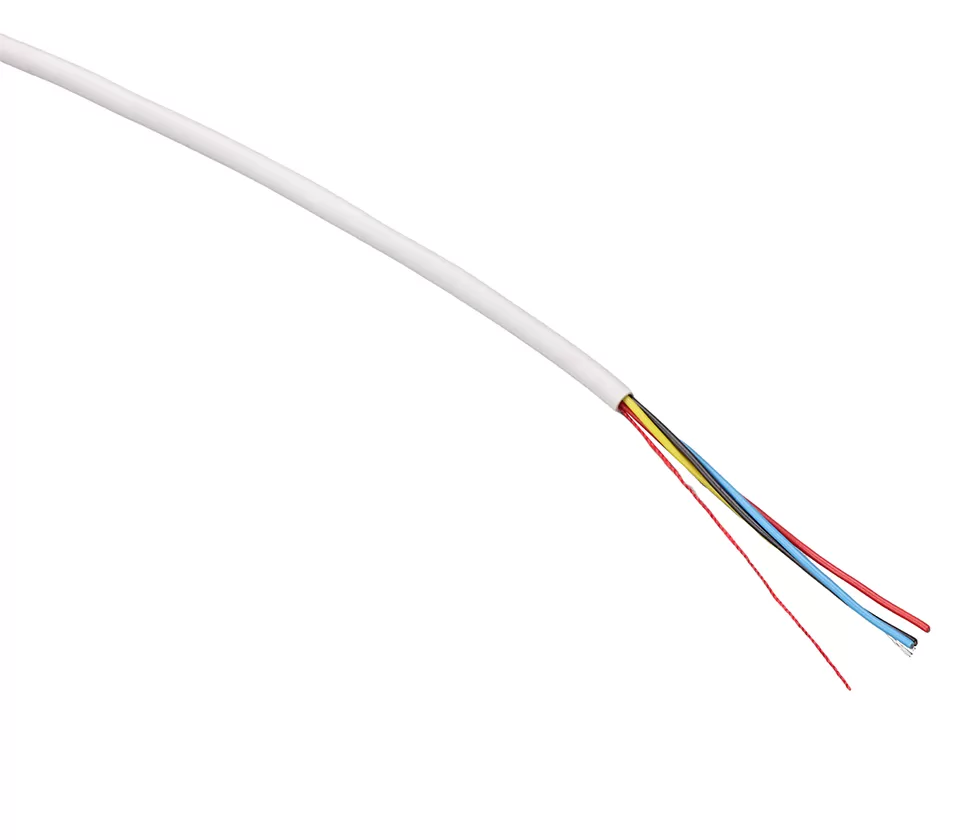
High-quality products, such as those available from Xingfa’s fire alarm cable range are engineered to meet these requirements. These cables are designed with appropriate conductor sizes (AWG), insulation materials, and fire-resistant properties to ensure stable performance and compliance with safety regulations. By choosing certified cable from professional manufacturers, users can ensure both electrical reliability and fire safety in critical installations.
Understanding AWG helps engineers, installers, and buyers make informed decisions. Key benefits include:
1. Safety Assurance: Correct wire size prevents overheating and reduces fire risks.
2. Performance Optimization: Proper AWG ensures efficient power transmission and minimal signal loss.
3. Compliance with Standards: Electrical codes often specify minimum AWG sizes for different applications.
4. Cost Efficiency: Oversized wires increase cost, while undersized wires compromise safety—AWG helps strike the right balance.
While AWG is standard in North America, many countries use metric cross-sectional area (mm²). For global projects, conversion between AWG and mm² is often necessary. However, since AWG is logarithmic and mm² is linear, conversions are not always exact and should be verified using standard tables.
AWG is a fundamental concept in electrical engineering and cable design. It defines the size, resistance, and current-carrying capacity of wires, making it essential for safe and efficient electrical systems. From everyday household wiring to specialized applications like fire alarm systems, choosing the correct AWG ensures reliability, compliance, and safety. High-quality cable solutions, such as Xingfa’s fire alarm cable products, demonstrate how proper AWG selection, combined with advanced materials and manufacturing, supports modern infrastructure.
By understanding AWG and applying it correctly, users can build systems that are not only high-performing but also durable and secure.