

Certificates: UL, CE, CPR, RoHS.
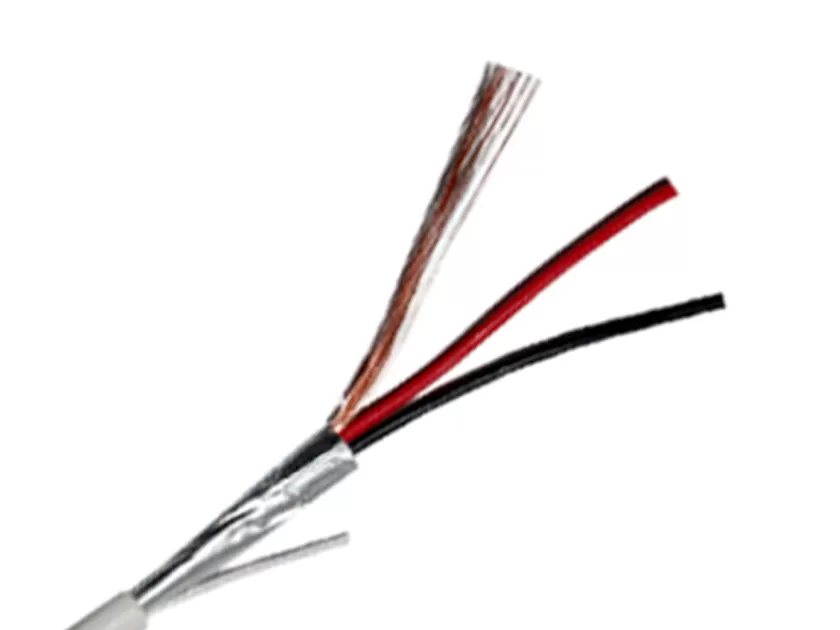
Provides reliable, interference-protected signal transmission for core alarm loops in fire detection and intrusion security systems.
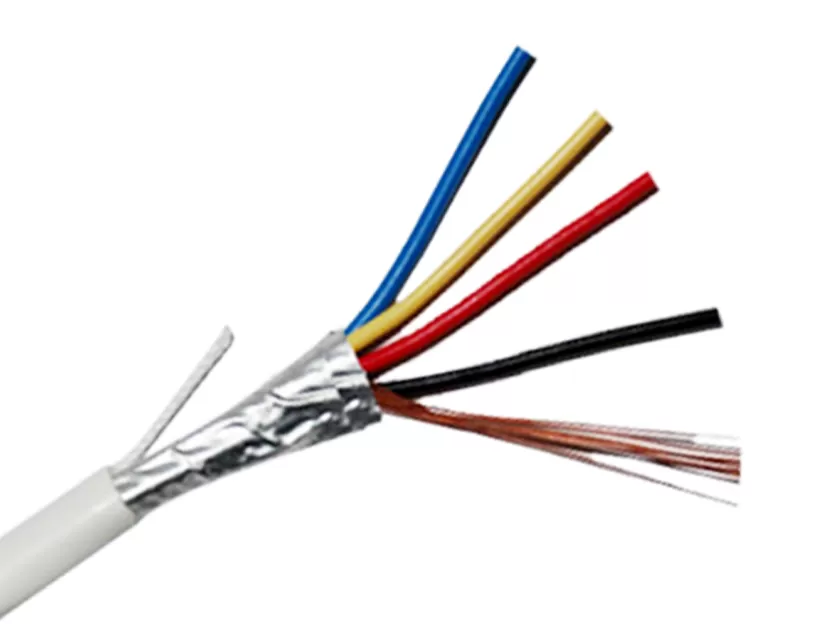
Certificates: UL, CE, CPR, RoHS.
A versatile 4-conductor shielded cable ideal for standard smoke detector and security device circuits requiring noise immunity.
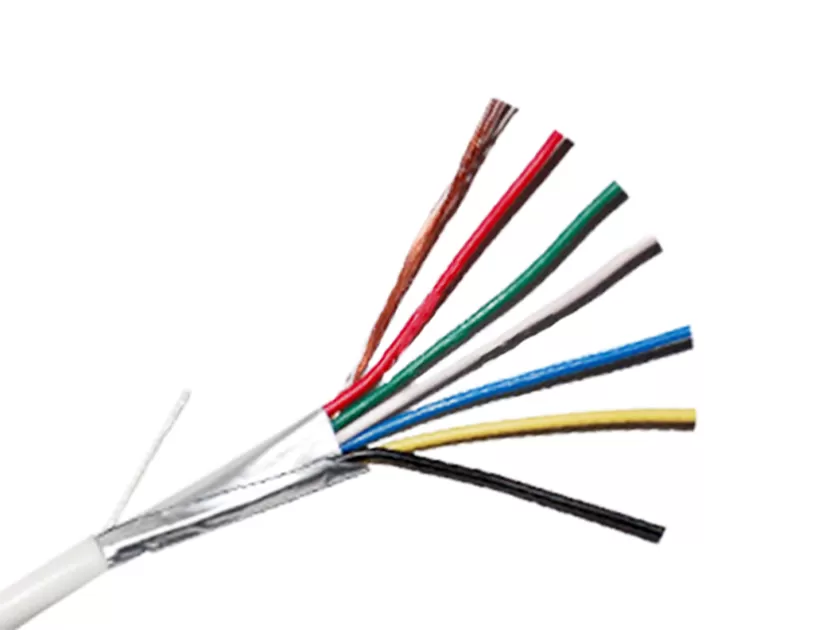
Certificates: UL, CE, CPR, RoHS.
Supports complex devices and multi-function panels, perfect for advanced security systems where multiple signals share a single run.
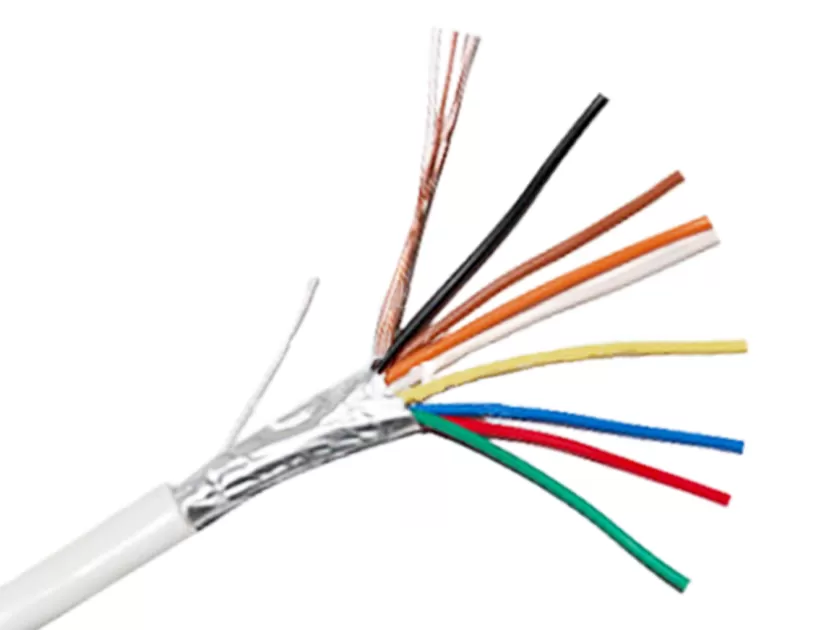
Certificates: UL, CE, CPR, RoHS.
Enables the connection of multiple devices on a single shielded pathway, optimizing cabling for medium-sized commercial alarm systems.
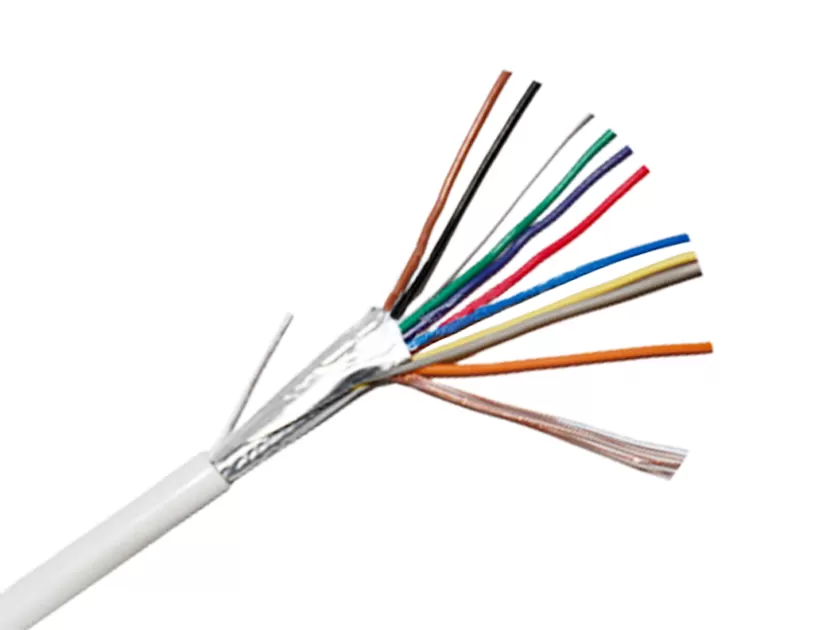
Certificates: UL, CE, CPR, RoHS.
Designed for high-density terminations and large zones in commercial buildings, ensuring clean signal transmission for extensive alarm networks.
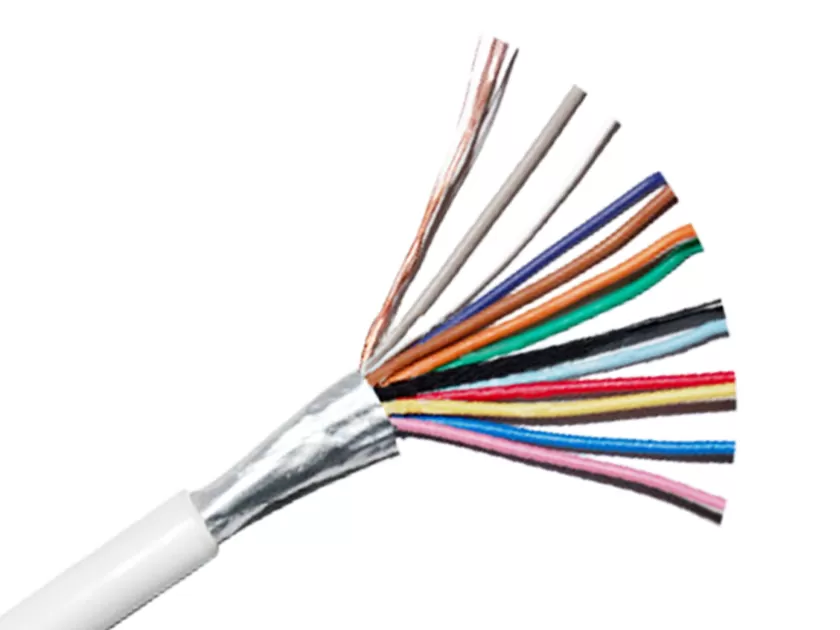
Certificates: UL, CE, CPR, RoHS.
A high-pair-count shielded cable for backbone riser runs or major alarm control panel connections in large-scale installations.
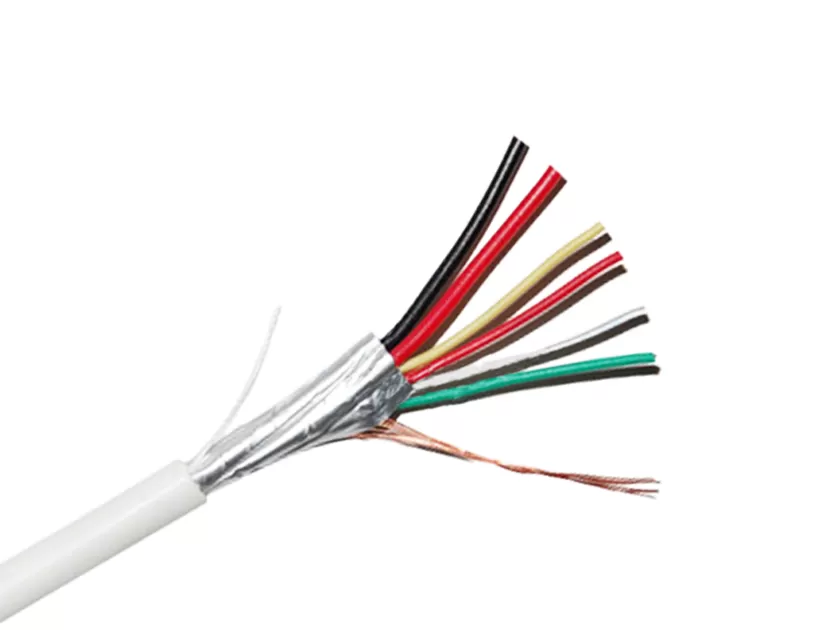
Certificates: UL, CE, CPR, RoHS.
A hybrid cable combining power (0.5mm²) and signal (0.22mm²) conductors, ideal for powering devices like horns while carrying control signals.
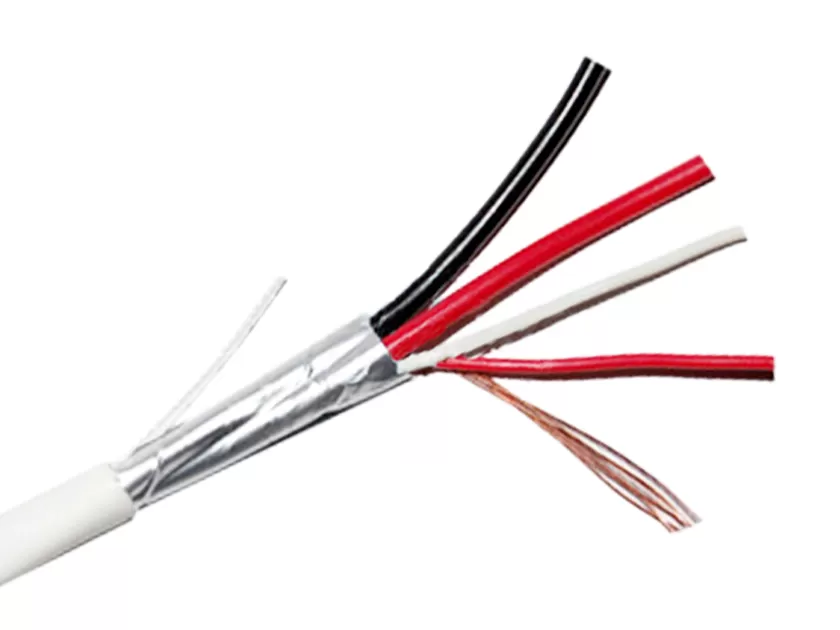
Certificates: UL, CE, CPR, RoHS.
Provides robust power delivery (0.75mm²) for devices like magnetic locks alongside signal lines, streamlining installations for access control systems.
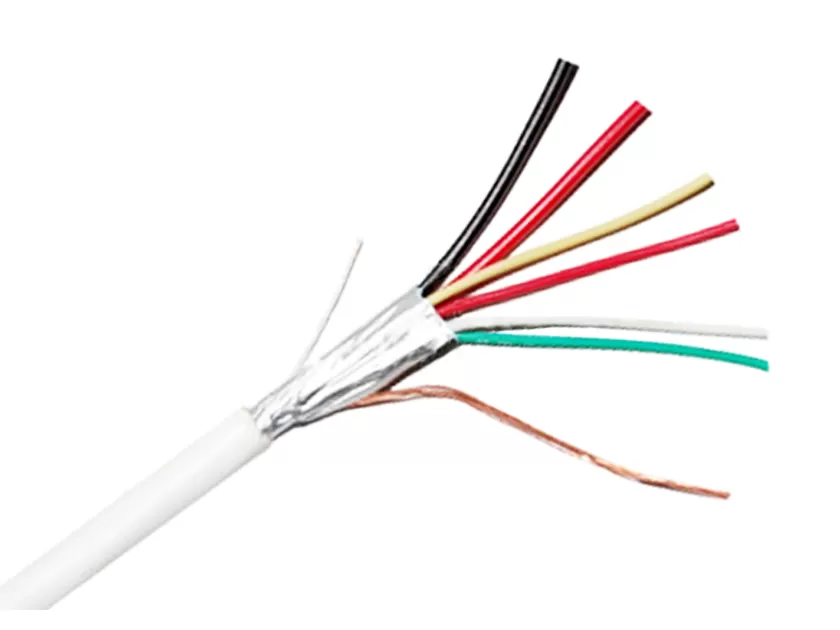
Certificates: UL, CE, CPR, RoHS.
Offers higher-capacity power and multiple signal circuits in one shielded cable, perfect for integrated security systems with powered devices.

In sensitive security and life safety installations, a single false alarm can erode trust and incur costly service calls. Our shielded alarm cables are engineered as the definitive solution to prevent signal corruption from external noise. Featuring a combination of aluminum foil and tinned copper braiding (F/STP or S/FTP), they create a Faraday cage that blocks interference from motors, power lines, RF transmitters, and other building systems. For you, stocking this cable means:
Solving High-Risk Installation Challenges: Essential for industrial facilities, hospitals (near MRI machines), parking garages with fluorescent lighting, and buildings near radio towers. Offering this solution positions you as an expert who can tackle complex, high-margin projects others avoid.
Building System-Wide Reliability: Beyond individual sensors, shielded cabling ensures the integrity of the entire addressable fire alarm loop or security system data bus. This prevents cascading failures and guarantees that the control panel receives accurate, uncompromised information for decision-making.
Meeting Global Specifications for Critical Infrastructure: Our shielded cables are manufactured to meet stringent international standards, including UL 1424 (for North America) and CPR Euroclass (for Europe), often with enhanced fire performance. They are the specified choice for projects where system uptime and reliability are contractually mandated.
 In what scenarios is unshielded alarm cable the correct and sufficient choice?
Unshielded cable is perfectly suitable and recommended for the majority of installations in electrically quiet environments. This includes standalone homes, most office buildings, retail spaces, and warehouses where cables are routed away from major sources of EMI like large motors, transformers, or heavy machinery power lines. It is the standard, cost-effective choice for these applications.
What are the key cost and performance differences between unshielded and shielded alarm cable?
The main difference is the absence of a metallic foil or braid shield. This makes unshielded cable more affordable, more flexible, and faster to install. Performance-wise, in a clean electrical environment, both will transmit signals reliably. Shielded cable is only necessary to protect the signal in noisy environments. Using unshielded where it’s sufficient saves significant material and labor costs.
Can your unshielded fire alarm cable meet building safety regulations like CPR in Europe?
Yes, absolutely. Fire performance (like CPR Euroclass ratings) is a function of the cable’s insulation and jacket materials, not its shielding. We offer unshielded fire alarm cables that achieve compliant CPR classifications (e.g., Dca-s1, d2, a2 or higher), making them fully approved for use in standard building constructions across the EU.
Do you offer different jacket types for unshielded cable, like riser or plenum ratings?
Yes, we provide a range of options to meet local building codes. Our standard unshielded alarm cable is typically rated for general purpose (CM/CMG) or riser (CMR) installations. For air-handling spaces (plenums), we can supply plenum-rated (CMP) versions, as required by the NEC in North America and similar regulations elsewhere.
What conductor configurations do you offer in unshielded cable for different systems?
We offer the most common configurations to cover standard system designs:
2-Conductor: For basic power-limited fire alarm circuits (e.g., horn/strobe loops).
4-Conductor: Versatile for security sensors, door contacts, or multi-circuit fire applications.
Multi-Pair (e.g., 2-Pair, 4-Pair): For addressable fire alarm systems or security panels that use data-style communication.