In an era dominated by high-speed fiber optics and Wi-Fi 6, the physical backbone of our networks, the Ethernet cable, remains as crucial as ever. Whether you are setting up a home office, upgrading a gaming rig, or wiring a large-scale commercial building, the choice often boils down to two industry standards: Cat5e and Cat6. While they may look identical to the naked eye, the internal engineering and performance capabilities of these cables differ significantly.
Understanding these differences is essential for optimizing network performance and ensuring your infrastructure is ready for future demands. As a leading manufacturer in the industry, Xingfa provides high-quality LAN cabling solutions for both categories, helping users bridge the gap between connectivity and reliability.
Cat5e, or Category 5 Enhanced, was introduced in 2001 as an improvement over the original Cat5 standard. The enhanced version was specifically designed to support Gigabit Ethernet speeds (1,000 Mbps). For nearly two decades, Cat5e has been the gold standard for residential and small office installations.
Technically, Cat5e operates at a frequency of 100 MHz. It consists of four twisted pairs of copper wire, engineered to reduce crosstalk, the unwanted signal interference between the internal wires. For most standard internet activities, such as HD streaming, video conferencing, and general web browsing, Xingfa’s bulk Cat5e cable remains a highly cost-effective and reliable choice. It supports speeds up to 1 Gbps at a maximum distance of 100 meters, making it more than sufficient for most modern household broadband connections.
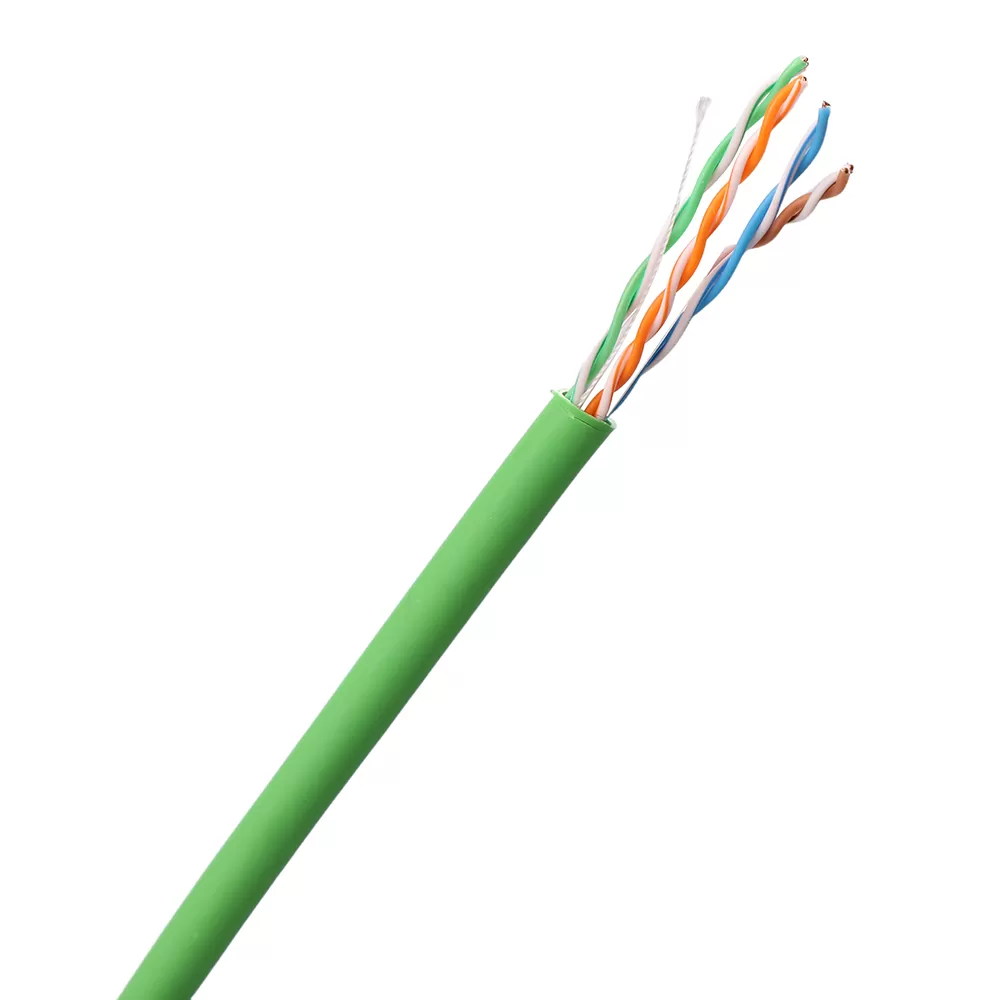
As data demands grew, the industry introduced Cat6 (Category 6). This standard was developed to handle higher bandwidth and faster data transfer rates. While Cat5e is built for 100 MHz, Cat6 is rated for 250 MHz, more than doubling the frequency.
The primary advantage of Cat6 is its ability to support 10 Gigabit Ethernet (10GBASE-T). However, there is a caveat regarding distance: while Cat6 can maintain 10 Gbps speeds, it can only do so for up to approximately 37 to 55 meters depending on the interference environment. For distances up to 100 meters, it reverts to 1 Gbps, similar to Cat5e, but with significantly cleaner signal quality.
Xingfa’s bulk Cat6 cable is engineered with tighter twists and often includes a physical separator known as a spline. This internal plastic cross helps keep the wire pairs isolated, drastically reducing Near-End Crosstalk (NEXT) and Alien Crosstalk (AXT).
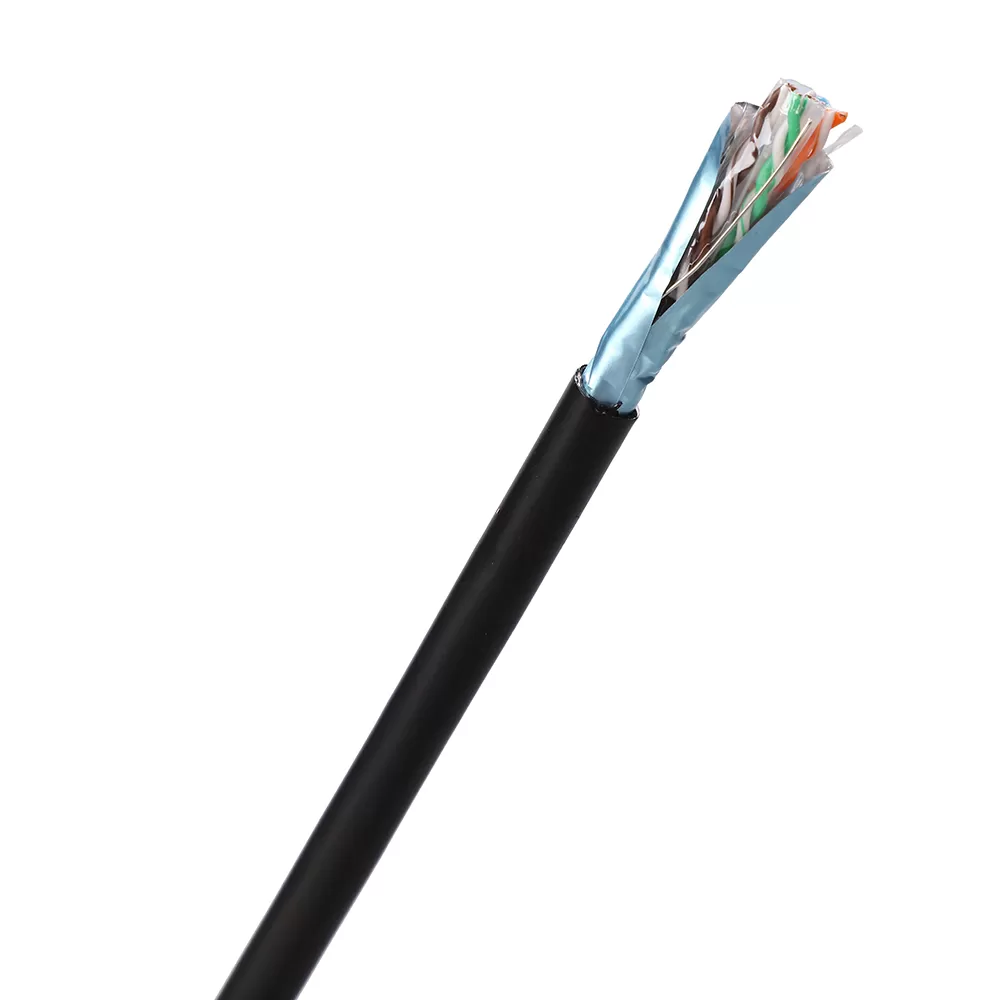
The most glaring difference is the bandwidth. Think of bandwidth as a highway; if Cat5e is a two-lane road, Cat6 is a four-lane highway. Both can handle cars moving at 60 mph, but the four-lane highway can handle significantly more traffic without causing a bottleneck. If your network involves heavy data transfers, such as moving large 4K video files between a NAS (Network Attached Storage) and a workstation, the 250 MHz frequency of Cat6 will provide a smoother, more efficient experience compared to Cat5e.
When handling these cables, you will notice that Cat6 is generally thicker and stiffer than Cat5e. This is due to the larger copper conductors, typically 23 AWG for Cat6 vs. 24 AWG for Cat5e, and the internal spline.
From an installation perspective, Cat5e is easier to pull through tight corners and conduits because of its flexibility. However, for professional installations where performance is the priority, the added durability and shielding of Cat6 are often worth the extra effort. The reduction in signal noise in Cat6 leads to fewer errors and retransmissions, ensuring a more stable connection even in environments with high electromagnetic interference.
Cost is often the deciding factor for many users. Cat5e is undeniably the more budget-friendly option. It is cheaper per foot and uses simpler RJ45 connectors. For a standard home user with a 300 Mbps or even a 1 Gbps internet plan, Cat5e will perform perfectly well.
However, networking is an investment in the future. As internet service providers (ISPs) begin offering multi-gigabit speeds, a Cat5e infrastructure may become a bottleneck. Upgrading the cables inside your walls is a labor-intensive and expensive process. Therefore, many experts recommend future-proofing by installing Cat6 from the start.
| Feature | Cat5e Cable | Cat6 Cable |
| Max Data Rate | 1 Gbps (1,000 Mbps) | 10 Gbps (up to 55 meters) |
| Bandwidth/Frequency | 100 MHz | 250 MHz |
| Standard Distance | 100 Meters at 1 Gbps | 100 Meters at 1 Gbps |
| Wire Gauge (Typical) | 24 AWG | 23 AWG |
| Crosstalk Protection | Standard | High, often includes internal spline |
| Flexibility | High, easier to install | Moderate, stiffer due to thickness |
| Best Use Case | Home internet, basic office | Gaming, 4K Video, Servers, PoE |
The decision between Cat5e and Cat6 depends on your specific use case:
Choose Cat5e if: You are on a tight budget, your internet speed is 1 Gbps or less, and you are doing a basic residential setup where cables are easily accessible for future replacement.
Choose Cat6 if: You are wiring a new home or office, you perform high-bandwidth tasks like 4K editing or server management, you are a competitive gamer looking for the lowest possible latency, or you want to ensure your building’s value stays high with modern infrastructure.
Both Cat5e and Cat6 have their place in the modern world. Cat5e remains a reliable, tried and true workhorse for standard connectivity. Meanwhile, Cat6 represents the bridge to the next generation of high-speed networking, offering superior shielding and 10Gbps potential.
When quality matters, sourcing your cables from a reputable manufacturer like Xingfa ensures that your network meets international standards for safety and performance. Whether you opt for the efficiency of Cat5e or the robust power of Cat6, choosing the right cable today will define your digital experience for years to come.